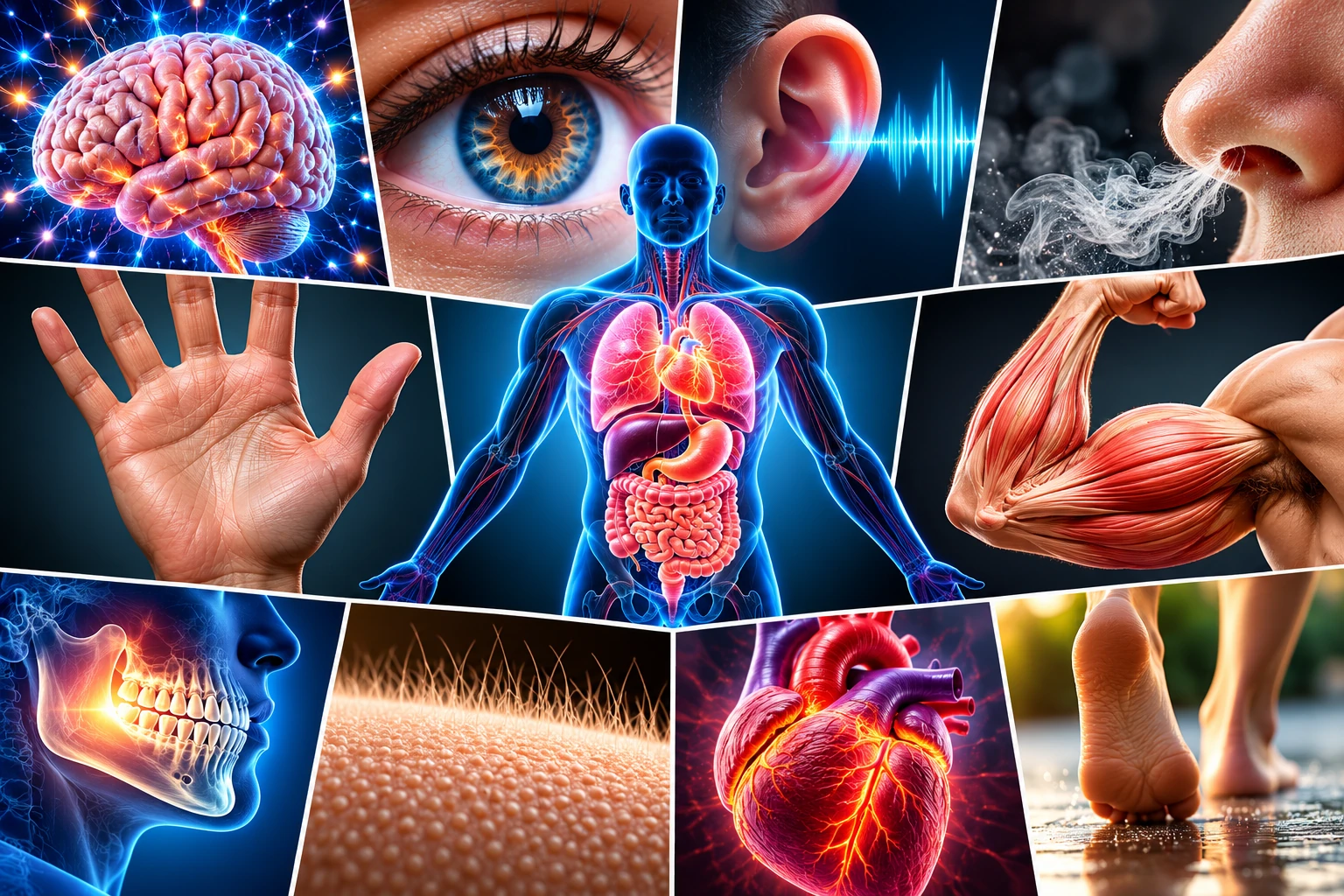
The human body is full of surprising abilities and unusual features. From electrical signals traveling through nerves to the complex ecosystem inside the digestive system, many everyday biological processes are more fascinating than they appear.
Although we use our bodies constantly, we rarely stop to think about the extraordinary systems working behind the scenes. Some facts sound almost impossible until we understand the science behind them.
1. Your Brain Uses Electrical Signals to Communicate
The brain contains billions of neurons that communicate through electrical and chemical signals. These signals help control movement, process information, form memories, and regulate many bodily functions.
When you decide to pick up a cup, networks of neurons coordinate activity that eventually sends instructions to your muscles.
The brain’s electrical activity can be measured using a technique called electroencephalography, or EEG. Doctors and researchers use EEG recordings to study brain activity and help investigate certain neurological conditions.
Although the brain operates through electrical signaling, it is not simply an electrical machine. Chemical messengers, complex networks, and interactions between different brain regions are also essential.
2. Your Stomach Has a Protective Lining
Your stomach produces hydrochloric acid, which helps break down food and supports digestion. The environment inside the stomach is highly acidic, yet the stomach generally avoids digesting itself.
How? Its protective lining produces mucus and bicarbonate, helping shield the underlying tissue from acid and digestive enzymes.
The lining is continually maintained and repaired, but it can still become damaged. Certain infections, medications, and other factors can contribute to ulcers or inflammation.
This protective system is a good example of how the body balances powerful chemical processes with mechanisms designed to prevent harm.
3. Your Bones Are Living Tissue
Bones may appear hard and lifeless, but they are active tissues that constantly undergo remodeling.
Specialized cells break down old bone tissue, while other cells help build new tissue. This process allows bones to adapt to physical demands and helps regulate minerals such as calcium.
Bone strength depends on several factors, including nutrition, hormones, age, physical activity, and genetics.
Weight-bearing activities and resistance exercises can support bone health, while adequate calcium and vitamin D are important for many people.
Your skeleton is not a fixed structure. It is a living system that changes throughout your life.
4. Your Heart Beats Around 100,000 Times a Day
A typical adult heart beats approximately 100,000 times per day, although the number varies with heart rate, activity, age, and individual circumstances.
Each heartbeat pumps blood through the circulatory system, delivering oxygen and nutrients to tissues and helping carry away waste products.
The heart’s rhythm is coordinated by electrical signals, with the sinoatrial node normally acting as the body’s natural pacemaker.
During exercise, the heart generally beats faster to supply working muscles. During rest, the rate may slow.
This continuous activity helps sustain the body whether you are walking, sleeping, reading, or exercising.
5. Your Skin Is the Body’s Largest Organ
The skin forms a protective barrier between your body and the outside environment. It helps regulate temperature, limits water loss, and contains sensory receptors that detect pressure, pain, and temperature.
Skin also contributes to immune defense and plays a role in producing vitamin D when exposed to ultraviolet B radiation.
Its outer layers continually shed dead cells, while new cells develop beneath them. The speed and pattern of this process vary across different body areas and with age.
Protecting your skin from excessive ultraviolet exposure and maintaining appropriate hygiene help support its normal functions.
6. Your Digestive System Contains Trillions of Microorganisms
The digestive tract is home to a large community of microorganisms known as the gut microbiome.
Many of these organisms help break down certain dietary fibers, produce useful metabolic compounds, and interact with the immune system.
The composition of the gut microbiome varies between individuals and can be influenced by diet, medications, environment, and other factors.
Scientists are still studying how particular microbial patterns relate to health conditions. There is no single microbiome profile that has been established as perfect for every person.
Eating a varied diet containing suitable fiber-rich foods can support digestive health without requiring expensive supplements or extreme dietary restrictions.
7. Your Body Produces Different Types of Tears
Tears are not produced only when you cry emotionally. Your eyes also produce tears to keep their surfaces moist and to respond to irritation.
Scientists commonly distinguish between basal tears, reflex tears, and emotional tears.
Basal tears help lubricate the eyes, while reflex tears increase in response to irritants such as smoke or onion vapors. Emotional tears occur in connection with emotional experiences.
Tears contain water, salts, proteins, and other substances that help maintain eye health.
Although the precise biological roles of emotional tears continue to be studied, all these forms of tearing demonstrate how the body responds to different needs.
8. Your Brain Can Change Throughout Life
The brain is capable of neuroplasticity, meaning that its connections and activity can change in response to learning, experience, and injury.
When you practice a new skill, such as playing an instrument or learning a language, the brain adapts through changes in neural networks.
This does not mean that every brain function can be restored completely after injury. The extent of adaptation depends on the person, the affected brain region, and the circumstances.
However, neuroplasticity helps explain why repeated practice, learning, and rehabilitation can improve certain abilities over time.
The brain is more adaptable than scientists once believed.
9. Your Body Uses Several Methods to Control Temperature
The human body maintains its internal temperature within a relatively narrow range under normal conditions.
When you become hot, sweat glands release sweat. As the sweat evaporates, it carries heat away from the skin.
Blood vessels near the skin may also widen, allowing more heat to escape. In cold conditions, blood vessels can narrow to conserve heat, while shivering generates additional warmth through muscle activity.
These mechanisms work together, although extreme heat, cold, dehydration, or certain medical conditions can overwhelm them.
This is why hydration, suitable clothing, and avoiding dangerous environmental conditions remain important.
10. Your Nose Can Recognize Thousands of Odors
Your sense of smell relies on specialized receptors in the nose that detect different odor-related molecules.
Signals from these receptors travel to brain regions involved in identifying smells and connecting them with memories and emotions.
A familiar fragrance may remind you of a childhood home, a particular meal, or a memorable place because smell is closely connected with memory-related brain systems.
The exact number of odors humans can distinguish depends on how researchers define and test odor perception. Claims that everyone can recognize one specific number of smells should therefore be treated cautiously.
Nevertheless, the human sense of smell is remarkably sophisticated and can detect subtle differences between many complex odor mixtures.