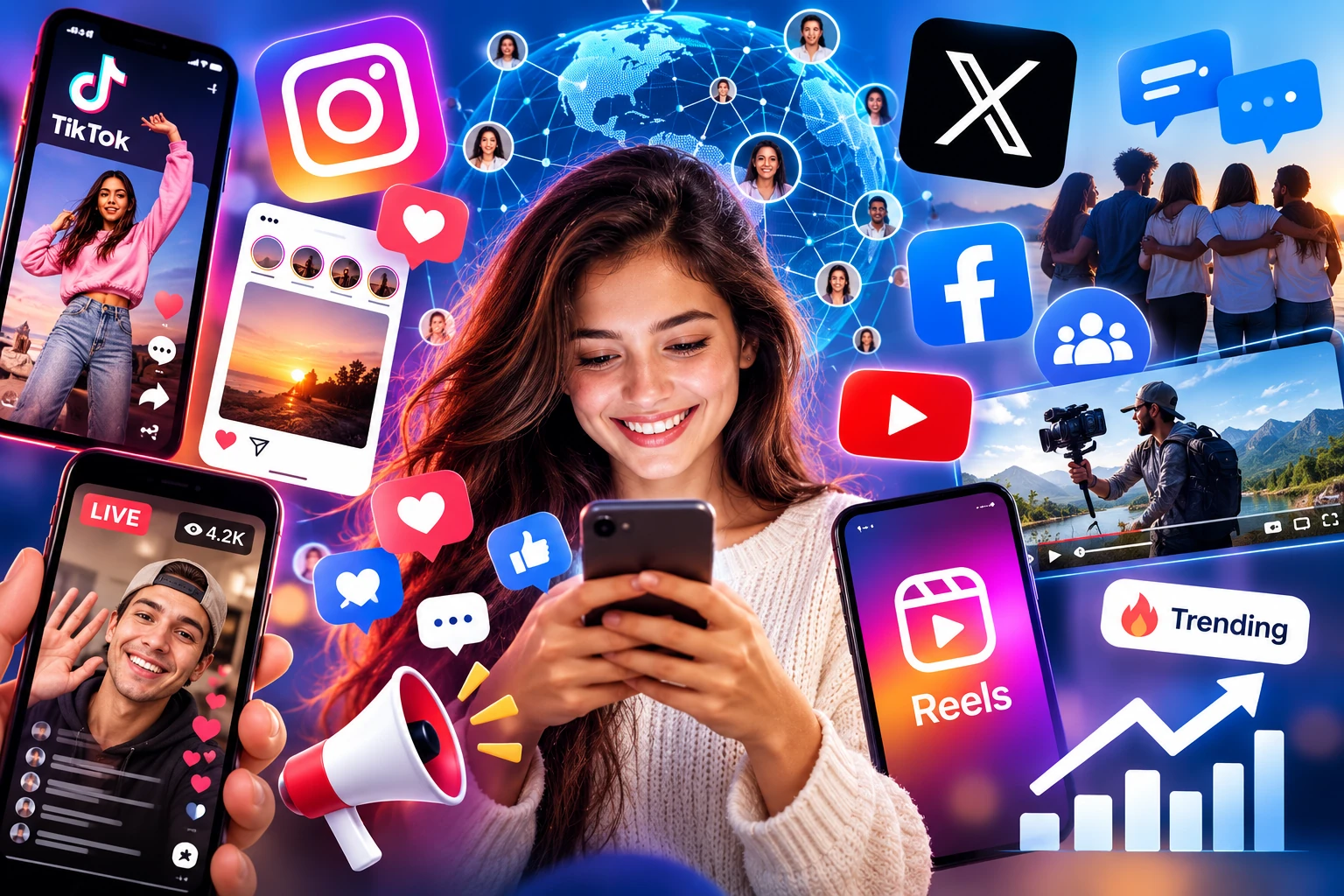
10 Social Media Trends That Changed the Way People Communicate Online
Social media has transformed communication in ways that were difficult to imagine just a few decades ago. Conversations that once depended on phone calls, letters, or face-to-face meetings now happen through instant messages, short videos, voice notes, and online communities. People can connect across countries, share experiences instantly, and participate in global conversations with just a few taps.
1. Short-Form Videos Have Changed Storytelling
Short videos have become a popular way to communicate ideas, humor, opinions, and personal experiences. Platforms such as TikTok, Instagram Reels, and YouTube Shorts encourage creators to deliver messages within a limited time.
Instead of reading lengthy explanations, users can watch quick tutorials, news summaries, product demonstrations, or comedy sketches. Visual storytelling makes information easy to consume and share.
However, short videos can leave out important details when a subject is complicated. Creators must balance entertainment with accuracy, especially when discussing educational or informational topics.
2. Memes Have Become a Universal Language
Memes allow people to express emotions and opinions through humorous images, captions, and references to popular culture.
A single meme can communicate frustration, excitement, embarrassment, or agreement without requiring a lengthy explanation. People often share memes to describe experiences that others can immediately recognize.
Memes can also bring communities together through shared humor. However, jokes may be misunderstood when audiences do not share the same cultural references or context.
3. Voice Notes Make Conversations More Personal
Voice messages have changed the way people communicate through messaging applications. Rather than typing every word, users can record their thoughts and send them instantly.
Voice notes communicate tone, emphasis, and emotion more naturally than plain text in many situations. They can also be convenient when someone is busy or unable to type.
However, long recordings may be inconvenient for recipients who cannot listen immediately. Keeping voice messages focused and considering the other person’s circumstances can make communication more effective.
4. Emojis Add Emotion to Digital Conversations
Text messages sometimes lack the facial expressions and gestures that help people understand face-to-face communication. Emojis help fill part of this gap.
A smiling face, heart, or laughing symbol can make a message feel warmer or clarify that a comment is playful.
Nevertheless, emoji meanings can vary between cultures, age groups, and individual users. A symbol intended as a joke may be interpreted differently by another person.
Using emojis thoughtfully can improve clarity without replacing words when a message needs careful explanation.
5. Influencers Have Changed Online Recommendations
Social media influencers have become important voices in areas such as fashion, travel, food, fitness, and technology.
Instead of relying exclusively on traditional advertisements, audiences often discover products and services through creators who share reviews, tutorials, and personal experiences.
This style of communication can feel conversational and relatable. However, sponsored promotions may influence the opinions presented.
Users should look for advertising disclosures, compare independent reviews, and distinguish personal recommendations from verified facts.
6. Live Streaming Creates Real-Time Interaction
Live streaming allows creators to communicate with audiences as events happen. Viewers can ask questions, post comments, and sometimes influence what happens during a broadcast.
Musicians, educators, gamers, businesses, and public figures use live sessions to connect with audiences more directly.
The immediate interaction can make online communication feel more personal. However, live broadcasts also require careful attention to privacy, moderation, and the possibility of sharing information unintentionally.
7. Private Groups Build Smaller Communities
Although social media platforms connect millions of users, many people prefer smaller spaces for meaningful conversations.
Private groups, community forums, and group chats allow people with shared interests to exchange advice and experiences. These communities may focus on hobbies, parenting, professional development, or local activities.
Smaller groups can encourage participation and create a stronger sense of belonging. However, members should respect privacy and avoid sharing sensitive information without permission.
8. Social Commerce Combines Conversation and Shopping
Social commerce allows users to discover products, ask questions, watch demonstrations, and sometimes purchase items without leaving a social platform.
Comments and creator videos can influence how people evaluate products. Businesses also use direct messages to answer customer questions and provide support.
This trend has made shopping more interactive, but it also increases the importance of checking seller credibility, product details, return policies, and payment security.
9. AI Tools Are Changing Online Content
Artificial intelligence tools can help users generate captions, translate messages, create images, summarize information, and improve written communication.
These features can make content creation faster and help people communicate across language barriers.
However, AI-generated material can contain errors or present misleading information. Users should review generated content carefully, particularly when sharing factual claims or sensitive messages.
Transparency is also important when AI-generated images or videos could be mistaken for genuine events.
10. Digital Communication Has Become More Visual
GIFs, stickers, reaction images, filters, and interactive stories allow people to communicate through more than written language.
A reaction GIF can express surprise, while a photo carousel can document a trip or explain a process. These visual formats make online interactions more engaging and accessible to different communication styles.
However, visual content can sometimes be taken out of context or create unrealistic expectations when heavily edited.
Using visuals thoughtfully helps people express themselves while maintaining authenticity.